Community updates delivered straight to your inbox
Access updates, events, and local alerts
Engage with neighbors, vote, and share concerns easily
Secure portal for dues, documents, and board news

YMRA

About the York Mills Residents Association

Founded in 1953, the York Mills Residents Association (YMRA) is one of Toronto’s longest-standing community organizations — a volunteer-driven, not-for-profit association dedicated to protecting and enhancing the quality of life for residents of the York Mills area.

For over seven decades, the YMRA has been the voice of our neighbourhood at City Hall and beyond. We’ve advocated for fair property taxation, responsible development, sensible traffic management, and the preservation of the natural and architectural character that makes York Mills a truly special place to live.

We are proud members of the Federation of North Toronto Residents’ Associations (FoNTRA), a coalition of over 30 neighbourhood associations working together on shared planning, development, and policy issues across Toronto.

What We Do

  • Monitor and respond to development applications, zoning changes, and Committee of Adjustment hearings that affect our neighbourhood
  • Represent residents’ interests at City Council, community councils, and provincial planning tribunals
  • Organize community events, candidate debates, and our Annual General Meeting
  • Publish regular updates on local issues, safety concerns, and City Hall decisions
  • Maintain a community directory and resource hub for York Mills residents
 

Who We Are
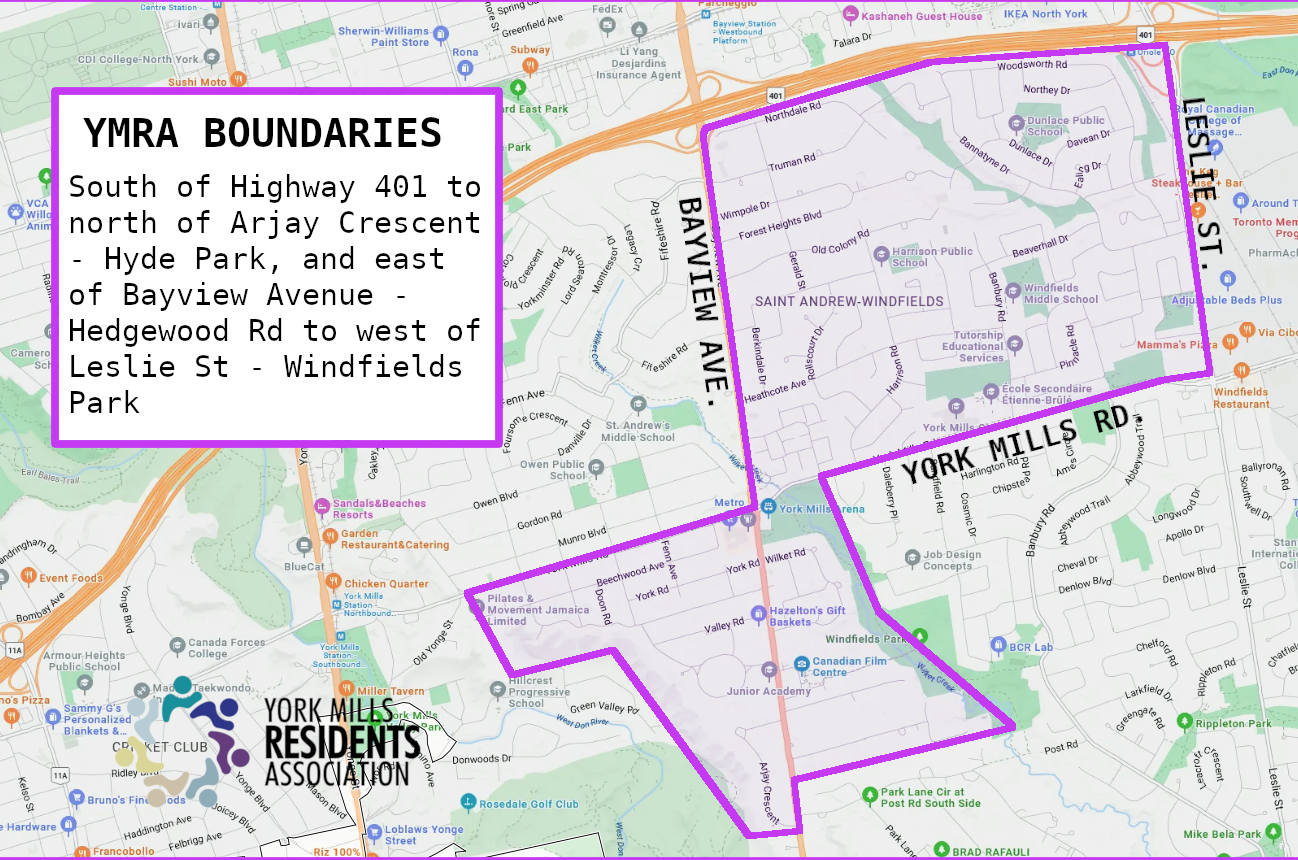
The YMRA is governed by a volunteer Board of Directors elected annually by our members. These are your neighbours — people who care deeply about this community and give their time to make it better. We welcome all residents within our boundaries to join, participate, and get involved.

In 2022, the Ontario government passed Bill 23 — the More Homes Built Faster Act. It was sweeping legislation designed to speed up housing construction across the province. While the goal of addressing Ontario's housing shortage is legitimate, the law had significant side effects for established neighbourhoods like ours:

  • It overrode local zoning rules, allowing up to 3 residential units on almost any residential lot — without requiring any community consultation or City approval.
  • It reduced municipalities' ability to say no — limiting the tools Toronto had to protect neighbourhood character, rental housing, and green space.
  • It weakened the role of Conservation Authorities and limited third-party appeals, making it harder for residents to challenge developments.
  • It cut development charges — fees developers pay to fund schools, parks, and infrastructure — meaning growth comes with less funding to support it.

In short: the Province told developers "yes" before the City or residents could weigh in.

📎 Read more: Bill 23 — Legislative Assembly of Ontario | Plain-language summary — Canadian Centre for Housing Rights

This will close in 20 seconds