Community updates delivered straight to your inbox
Access updates, events, and local alerts
Engage with neighbors, vote, and share concerns easily
Secure portal for dues, documents, and board news

Our Neighbourhood

Our Neighbourhood

Welcome to York Mills — one of Toronto’s most treasured residential communities, nestled between the Don Valley ravine system and the vibrant corridors of Yonge Street, Bayview Avenue, and Leslie Street.

The name “York Mills” traces back to the early 19th century, when gristmills and sawmills operated along the Don River valley from 1804 to 1926. Today, the area is celebrated for its mature tree canopy, ravine-side trails, generous residential lots, and a strong sense of community that has endured for generations.

Natural Beauty

Bordered by the Don Valley ravine system, York Mills offers unparalleled access to green space, walking trails, and natural landscapes within the city.

Architectural Character

From mid-century homes to elegant estates, the neighbourhood’s built form reflects decades of thoughtful residential development.

Excellent Schools

York Mills is home to some of Toronto’s most respected public and private schools, making it a top destination for families.

Convenient Location

With easy access to Highway 401, the Yonge subway line, and major arterials, York Mills combines the tranquility of a residential enclave with the connectivity of a major urban centre.

Community Spirit

From block parties to the AGM, York Mills residents are engaged, neighbourly, and proud of where they live.

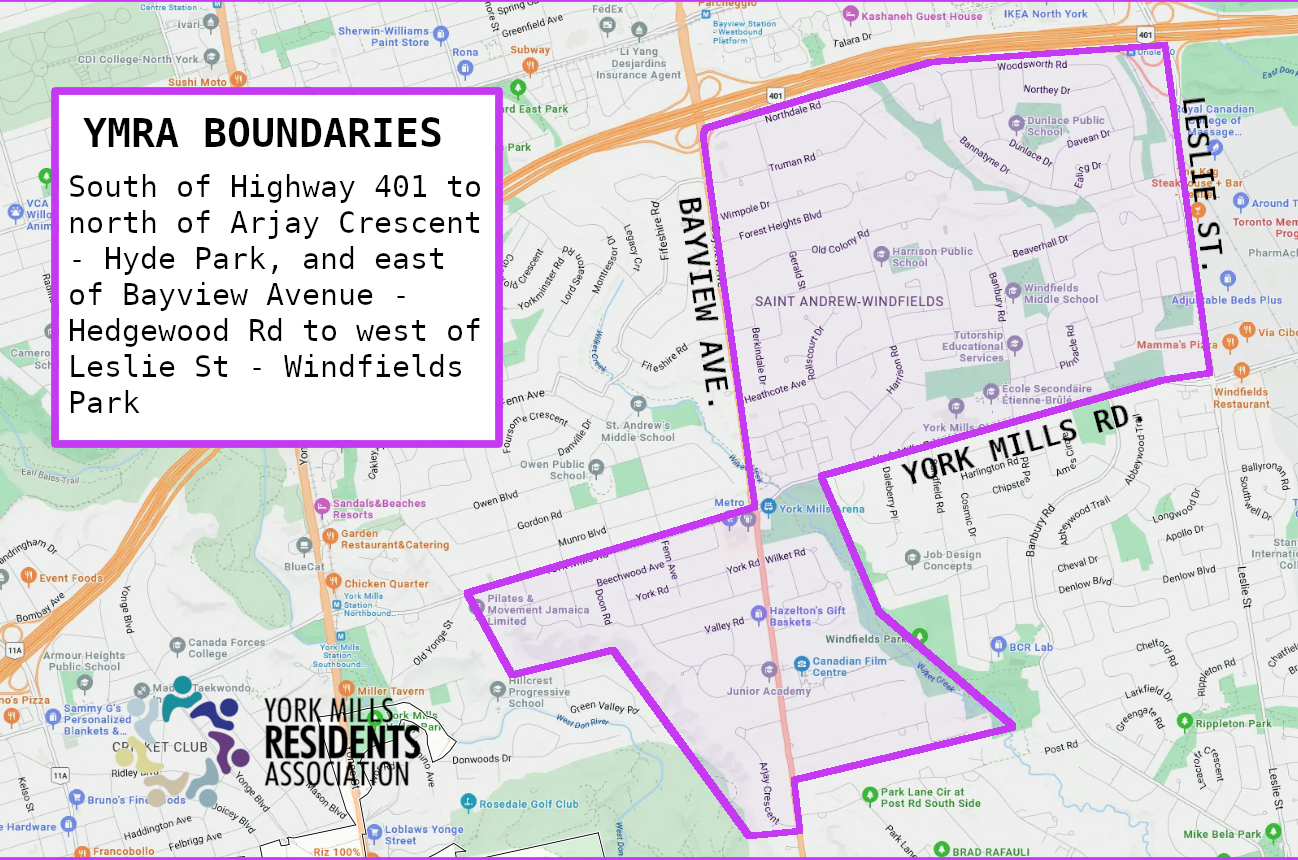
The Area We Serve

In 2022, the Ontario government passed Bill 23 — the More Homes Built Faster Act. It was sweeping legislation designed to speed up housing construction across the province. While the goal of addressing Ontario's housing shortage is legitimate, the law had significant side effects for established neighbourhoods like ours:

  • It overrode local zoning rules, allowing up to 3 residential units on almost any residential lot — without requiring any community consultation or City approval.
  • It reduced municipalities' ability to say no — limiting the tools Toronto had to protect neighbourhood character, rental housing, and green space.
  • It weakened the role of Conservation Authorities and limited third-party appeals, making it harder for residents to challenge developments.
  • It cut development charges — fees developers pay to fund schools, parks, and infrastructure — meaning growth comes with less funding to support it.

In short: the Province told developers "yes" before the City or residents could weigh in.

📎 Read more: Bill 23 — Legislative Assembly of Ontario | Plain-language summary — Canadian Centre for Housing Rights

This will close in 20 seconds